Uma Reed · 29 September 2026
Polish Port Archives Reveal How Early Dock Training Shaped Today's Congestion Management Tactics
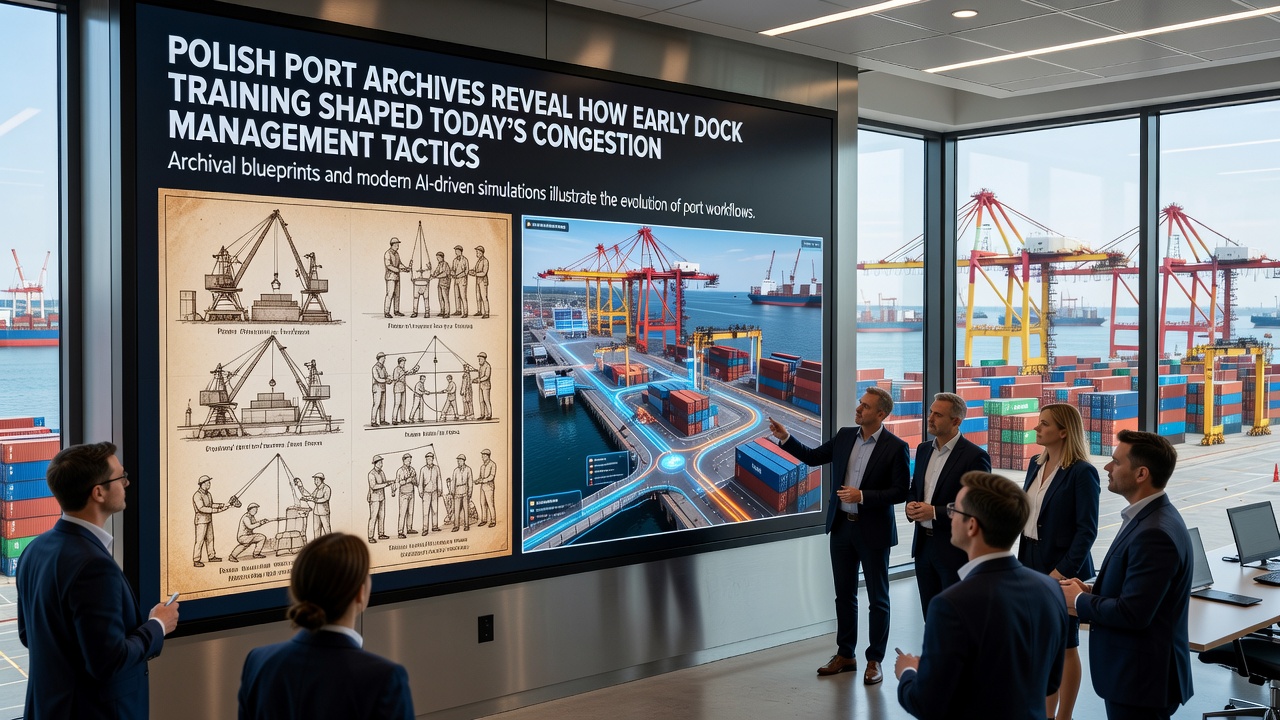
Polish port archives contain detailed records of dock worker training programs that began in the 1950s and these documents illustrate direct connections to present-day strategies for handling vessel congestion at major harbors. Researchers who examined files from facilities in Gdansk and Gdynia found that structured instruction in cargo handling sequences and arrival coordination formed the basis for scheduling systems still in use today. Data from those early sessions show how trainees learned to sequence ship berthing to prevent simultaneous arrivals that would overwhelm limited quay space and equipment.
Origins of Structured Dock Instruction
Training initiatives launched after World War II emphasized repetitive drills on timing and spatial awareness because port managers needed reliable methods to process increasing volumes of bulk cargo and manufactured goods. Instructors required workers to practice synchronized movements with cranes and rail cars while maintaining logs that tracked each vessel's approach and departure window. Those logs later became prototypes for digital tracking tools that now predict congestion windows days in advance. Observers note that the emphasis on written documentation during training sessions created a culture of record-keeping that persists in current port authority databases.
Key Elements of Early Programs
- Daily briefings on tide tables and weather patterns that influenced berthing decisions
- Hands-on exercises in cargo segregation to speed unloading sequences
- Apprenticeship rotations across multiple vessel types to build adaptability
Port records indicate that by the late 1960s these programs had expanded to include cross-training between different trade unions so that personnel could shift roles during peak periods without losing operational continuity. Such flexibility reduced bottlenecks when multiple ships arrived within the same twelve-hour period and authorities applied the same principle later when they introduced staggered arrival incentives for shipping lines.
Transition from Paper Logs to Predictive Systems
Archival material reveals that handwritten shift reports from the 1970s supplied the first datasets used to model peak congestion hours and statisticians working with Polish maritime institutes converted those reports into algorithms that calculated optimal berth allocations. The resulting formulas appear in contemporary software platforms employed by ports across Europe and North America. A report published by the U.S. Department of Transportation highlights similar data-driven approaches adopted after studying European precedents and notes measurable reductions in average vessel wait times at participating facilities.
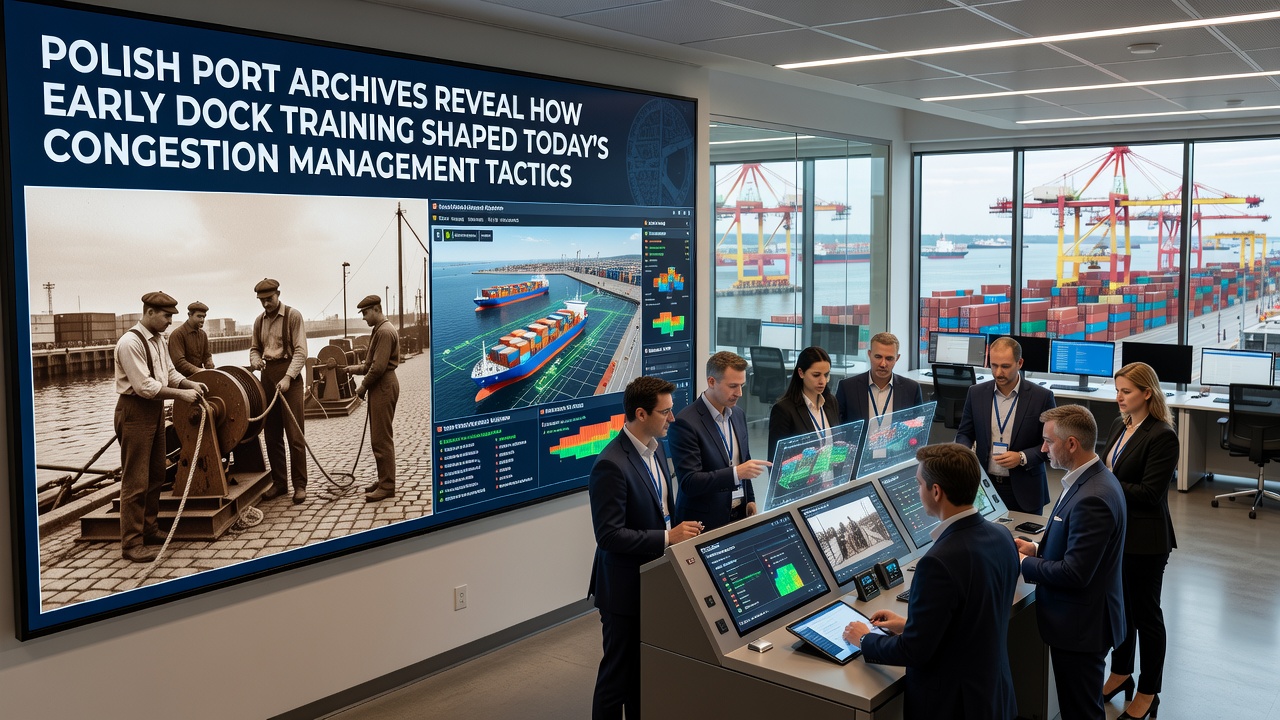
Training archives also document how instructors introduced scenario-based drills that simulated sudden surges in container traffic and these exercises trained supervisors to reroute trucks and rail cars in real time. The same decision trees now underpin automated traffic management systems that adjust gate access during high-volume periods. Evidence from Szczecin port logs demonstrates that workers who completed the scenario drills achieved faster turnaround rates than those who relied solely on on-the-job experience and that performance gap prompted wider adoption of simulation components in later decades.
International Comparisons and Data Sharing
Comparative studies conducted in the 1990s by researchers from the University of British Columbia examined Polish training records alongside Canadian port statistics and identified parallel improvements in congestion metrics after both regions implemented structured pre-arrival planning. The study found that ports maintaining detailed historical training archives experienced fewer prolonged backlogs because planners could reference past outcomes when adjusting current schedules. Australian Maritime Safety Authority publications later cited these findings when recommending enhanced documentation standards for training programs at major container terminals.
Polish archives further show that instructors incorporated feedback loops where trainees submitted written evaluations of each shift's efficiency and managers aggregated those evaluations into quarterly reports that informed equipment purchases and staffing levels. This practice of continuous data collection survives in today's key performance indicator dashboards that track berth occupancy rates and idle time percentages. In September 2026 port authorities in Gdansk plan to release an updated congestion forecast model that draws directly on digitized versions of those original trainee reports.
Conclusion
Records preserved in Polish port facilities demonstrate that systematic early training in operational timing and documentation produced measurable improvements in vessel flow that continue to influence global congestion management practices. The progression from handwritten logs to integrated digital platforms reflects incremental refinements rather than sudden innovations and those refinements remain traceable to specific instructional methods developed decades ago. Ongoing analysis of the same archives supplies port planners with concrete benchmarks against which to measure new scheduling technologies.